
India's consumer price index (CPI)-based retail inflation rate is likely to have cooled further in June, thus remaining below the 4 per cent target of the Reserve Bank of India (RBI) for a fifth consecutive month, giving the central bank wiggle room to focus on growth. Economists reckon that the decline is on account of easing prices in various categories of goods, especially food items, and a favourable base effect.

With deposit growth remaining sluggish and the credit - deposit ratio of commercial banks crossing 80 per cent, banks have ramped up their borrowing in the certificate of deposit (CD) market. In the fortnight ended November 14, CD issuances climbed to nearly Rs 55,000 crore - double the borrowings of the preceding two fortnights and the highest since the September 19 fortnight.

High US tariffs are expected to affect close to 8 per cent of India's overall auto component production, ratings firm Icra said on Wednesday. Indian auto component exporters are at a relative disadvantage compared to most other Asian exporting nations, highlighting the importance of concluding an India-US bilateral trade agreement, it added.

Network scale seen as central to tapping smaller markets.

Retail inflation slipped to 1.54 per cent in September from 2.07 per cent in the preceding month mainly due to subdued prices of food items, including vegetables and pulses, according to government data released on Monday. The consumer price index (CPI) based inflation was 5.49 per cent in September 2024.

The Indian economy recorded a six-quarter high growth of 8.2 per cent in July-September, as factories churned out more products in anticipation of a consumption boost from the GST rate cut, according to government data.

Indian automakers are reviving legacy nameplates to leverage brand recall and stand out in a crowded market, as classic badges like Sierra, Safari, Baleno and Scorpio return to attract buyers.
India, the world's fourth largest economy, is set to maintain the 'goldilocks' phase with tailwinds of good growth, low inflation and robust banking performance as well as reform initiatives poised to sustain the economic pace witnessed during 2025.

Domestic rating agency Icra on Wednesday said India's real GDP growth for the September quarter is likely to decline to 6.5 per cent due to heavy rains and weaker corporate performance. The agency, however, maintained its FY25 growth estimate at 7 per cent on expectations of a pick up in economic activity in the second half of the fiscal.

Credit quality of Indian corporate is expected to be stable in the second half of the current financial year (H2FY26), supported by easing monetary cycle, and declining inflation, coupled with income-tax relief and rationalisation of the goods and service tax (GST) rates, among others.

Domestic rating agency Icra on Monday revised its FY24 GDP growth forecast to 6.5 per cent from 6.2 per cent earlier. However, the revised forecast is still much lower than the Reserve Bank of India's (RBI's) 7 per cent real Gross Domestic Product (GDP) growth estimate for the ongoing fiscal. Earlier this month, the RBI had revised upwards its GDP estimate to 7 per cent from 6.5 per cent, calling the revised number a "conservative" one.

Credit rating agency ICRA expects interest rates in the Indian economy to harden, which together with a slowdown in agriculture growth, will put pressure on industrial activity and profitability of the banking sector.

Saudi Arabia's steep cut in LPG benchmark prices has pushed India's household LPG underrecoveries to their lowest level in over two years, slashing oil companies' losses from Rs 200-250 per cylinder last year to about Rs 20-40 now.

India's net oil import bill could widen to $101-104 billion in current fiscal from $96.1 billion in 2023-24 and any escalation in the Iran-Israel conflict could impart an upward pressure on the value of imports, ICRA said on Tuesday. The domestic rating agency said based on its analysis, lower value of Russian oil imports is estimated to have led to savings of $7.9 billion in 11 months (April-February) of 2023-24, up from $5.1 billion in 2022-23.
India's decision to import LPG from the US helps it to diversify sources as it reduces almost full reliance on West Asian countries for supply of the country's primary cooking fuel.

Domestic air passenger traffic grew 5.1 per cent year-on-year to an estimated 138.9 million in May and was significantly higher by around 14 per cent than pre-Covid levels, credit ratings agency Icra said on Thursday. Icra also said the outlook on the Indian aviation industry is stable amid the continued recovery in domestic and international air passenger traffic with a relatively stable cost environment and expectations of the trend continuing in FY2025.

The upgrade, said Icra, takes into account the "robust internal accrual generation, leading to low reliance on debt, as well as gearing levels, and strong debt protection metrics".
The RBI is likely to reduce the key interest rate by 25 basis points this week after keeping it on hold for two years, complementing the Union Budget initiatives to push consumption-led demand, though the sliding rupee continues to be a concern. As the retail inflation has remained within the Reserve Bank's comfort zone (less than 6 per cent) for most of the year, the central bank can take rate action to boost growth hit by sluggish consumption, opined experts.

India, the world's third largest oil importing and consuming nation, is likely to save as much as Rs 1.8 lakh crore on import of crude oil and LNG if the trend of softening international energy rates continues, Icra said Wednesday. India, which meets over 85 per cent of its crude oil needs through imports, spent $242.4 billion on buying crude from overseas in the fiscal year ended March 31, 2025.

Indian airline industry is expecting to prune its net losses to Rs 3,000-5,000 crore in this fiscal from an estimated Rs 17,000-17,500 crore in FY2023 on the back of improved yields and stable cost environment, credit ratings agency ICRA said on Tuesday. At the same time, ICRA also estimated that domestic air passenger traffic will expand by 8-13 per cent each in FY2024 and FY2025. The rating agency has also maintained its stable outlook on the industry in view of healthy passenger traffic growth, improved yields and a stable cost environment.

Indian economy grew by 7.8 per cent in April-June -- the highest in five quarters -- before the disruptive US tariffs were imposed.

Inventories of rare earth magnets used in critical automotive components - particularly electric vehicle (EV) traction motors and power steering systems - could run dry by mid-July this year, according to rating agency Icra.
Domestic air passenger traffic touched 1.25 crore in January this year, an increase of 96 per cent compared to the year-ago period, according to rating agency Icra. However, it said the traffic remained around 2 per cent lower compared to the pre-Covid levels -- January 2020. The traffic stood at 64 lakh in January last year. Icra is maintaining a negative outlook on the Indian aviation industry, reflecting the view that the financial performance of Indian airlines is likely to remain under pressure in the near term, even though the recovery in domestic passenger traffic has been healthy.

The reason for both the officials being sent on leave is the same - an anonymous complaint received by the market regulator against the agency.

The output of eight key infrastructure sectors slowed down to an eight-month low of 0.5 per cent in April due to contraction in the production of crude oil, refinery products and fertiliser. According to official data released on Tuesday, these eight sectors -- coal, crude oil, refinery products, natural gas, steel, cement, electricity and fertiliser -- expanded by 6.9 per cent in April 2024.

With decline in number of fresh COVID-19 cases and easing of restrictions, the country's gross domestic product (GDP) will grow at 8.5 per cent in FY2021-22, according to credit rating agency Icra Ratings. It expects the gross value added (GVA) at basic prices (at constant 2011-12 prices) to grow at 7.3 per cent in FY2022. "The impact of the second wave of COVID-19 and the ensuing state-wise restrictions was seen across a variety of high frequency indicators in April-May 2021.

In three separate but similarly-worded orders, Sebi said the default by IL&FS occurred due to "lethargic indifference and needless procrastination and laxity" of the rating agencies.

After a subdued first quarter of 2025-26 (Q1FY26), banks are now betting big on the festive season, rolling out attractive loan offers to boost credit growth in the second half of the current financial year (H2FY26) - a trend likely to be further accentuated by the second-order effects of the good services tax (GST) cuts.

Despite gross domestic product (GDP) growth being lower-than-expected for the July-September quarter, the six-member Monetary Policy Committee (MPC) may not cut the policy repo rate in the review meeting scheduled for next week due to high inflation in October, according to experts. "Consumer Price Index (CPI) inflation breaching the upper limit of the RBI's tolerance band in October (6.2 per cent year-on-year) is not a favourable backdrop for the MPC to commence the easing cycle, even as the growth outcome disappointed the MPC's expectations," said Shreya Sodhani, regional economist at Barclays, who expects the policy repo rate to be kept unchanged in the December meeting.

Infrastructure bonds, which were relied upon the most in 2024-25 (FY25) by commercial banks to raise funds through the domestic debt capital market amid lagging deposit growth, seem to have lost their sheen in FY26. So far in FY26, no bank has tapped the domestic debt capital market to raise funds via infra bonds, and the expectation is that the amount raised through this route will be significantly lower than that last year, unless credit demand picks up.

The country's industrial production grew at 4 per cent in August, mainly due to better performance by the mining sector, according to government data released on Monday.
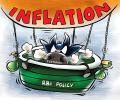
Retail inflation slipped to seven-month low of 3.61 per cent in February mainly due to easing prices of vegetables, eggs, and other protein-rich items, creating space for the RBI to go for another cut in interest rate next month.

Domestic gold jewellery consumption is likely to decline by 9-10 per cent in 2025-26, mainly due to a 33 per cent surge in gold prices, a report said on Thursday. The consumption of bars and coins increased 17 per cent and 25 per cent, respectively, in FY24 and FY25, reflecting investor preference for safe-haven assets amid global macroeconomic uncertainty and heightened geopolitical and trade tensions, Icra said in the report.

Indian auto component exporters may suffer a hit of 2,700 crore to 4,500 crore on their earnings after the imposition of steep US tariffs on key automotive parts, credit rating agency ICRA said in a note on Monday. The new 25 per cent tariff on engines, transmission, electrical components, and other auto parts may moderate the overall auto component industry's revenue growth to 6-8 per cent in 2025-26 (FY26), down from an earlier projection of 8-10 per cent.

Mahindra & Mahindra plans to manage rare earth magnet supplies through alternative sourcing channels for the next nine months and will pursue 'engineering efforts' to address the raw material shortage situation amid growing product portfolio, according to a senior company executive. The imposition of export restrictions by China on key rare earth magnets has resulted in supply chain bottlenecks, impacting the user industries, including the auto and electronics sectors.

Domestic rating agency ICRA on Monday said Indian companies are likely to clock 7-8 per cent revenue growth during the March quarter of the current fiscal year, led by revival in rural demand and uptick in government spending. ICRA expects the private capital expenditure (capex) cycle to remain measured in view of the uncertainties around geopolitical developments and relatively subdued outlook on merchandise exports from India.
Interest on home loans is likely to remain low and the share of banks in the overall mortgage market is set to rise in the medium term.
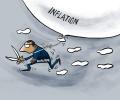
Wholesale price based inflation declined to a 3-month low of 1.89 per cent in November on cheaper food items, and experts predicted a 0.25 per cent interest rate cut by the RBI in the policy review in February. The Wholesale Price Index (WPI) based inflation was 2.36 per cent in October 2024. It was 0.39 per cent in November, last year. In August, 2024, it was 1.25 per cent.

India's brittle energy security is inextricably linked to two opposing paradigms - fossil fuels, and the transition to green energy. The first powers the present; the second paves the way for Viksit Bharat in 2047.

The move is to align affordable housing finance flows to the increase in property costs and inflation, says Raghu Mohan.
